Venting Vs Therapy: Why Venting is Only a Temporary Fix?
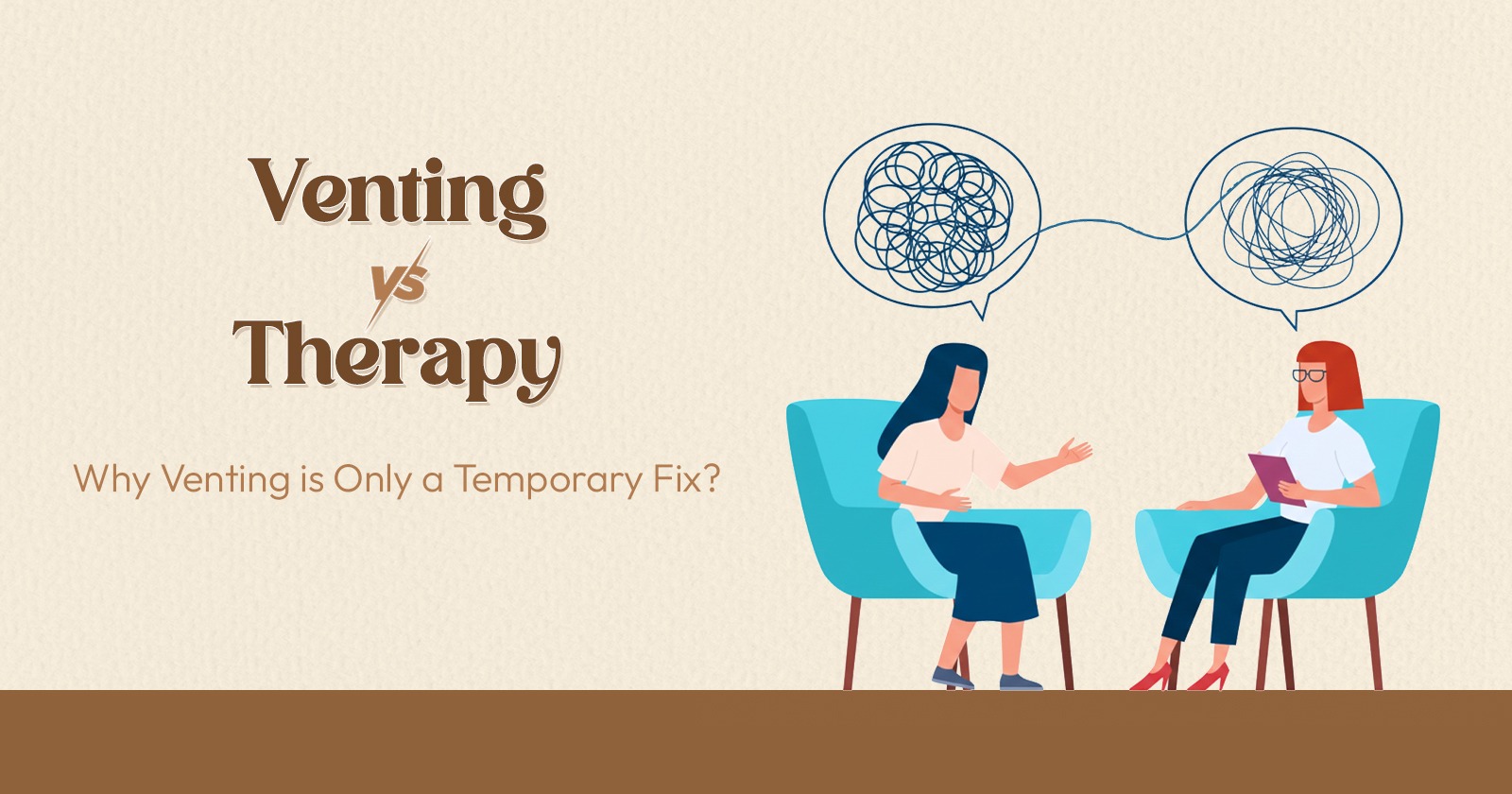
Talking is Not Therapy: Why Real Therapy Goes Beyond Venting
It’s 2 a.m., and sleep is miles away from you. You keep tossing and turning despite the comfort of your bed. Your train of thought is racing. Your mind is in overdrive. It keeps replaying stressful scenarios, both real and imagined. Overwhelmed, you reach for your phone, searching for someone who can listen to you and might soothe your mind.
You hesitate before dialing, expecting them to be asleep. However, the urge to pour yourself out is strong. You dial and wait with bated breath. If you have a 3 a.m. friend, you would know the reassuring feeling that comes when the other end finally says hello.
What follows is you putting your emotions into words. You trust your feelings with someone you know to be supportive. This act of venting lowers activity in the brain, reducing stress and anxiety, and thus calms the nervous system.
The instant relief from venting may tempt you to seek your friend every time anxiety strikes. However, this does not address the core issue. With the root cause unattended, each episode of anxiety could become more severe.
That is why, more than a friend in need, you indeed need a therapist.
Why Venting Works
Venting, most people feel, is the best and quickest way to deal with emotional turmoil. Putting complex emotions into words helps us process our experiences. This seems more effective than simply replaying the struggle in our minds. Hearing ourselves out and knowing that the other person is empathetic to our side of the story can bring immediate relief. Friends often validate our feelings. They reinforce our perspective on the issue.
However, the relief venting brings, as mentioned, is temporary.
The Drawbacks of Venting
On the flip side, venting, when done repeatedly, can reinforce our negative feelings. We vent to just share our emotions, not resolve them. We dwell upon problems, amplifying stress. In some cases, our repeated outbursts can even strain our relationship with the friend. They may get overwhelmed or lose patience with our regular venting.
That is why we need to turn to professional therapists.
Why Therapy
Therapy goes beyond venting. It focuses on healing and offers an objective approach to our problems. Therapists are trained to listen to us and provide comfort. They also help us see through the clutter of our thoughts and find solutions that benefit us in the long term.
As professionals, therapists help you understand and work through the root of your struggles. They use evidence-based techniques to help you break emotionally stressful cycles and move forward.
Moreover, a therapist, being an outsider, isn’t tied to your emotional situation and provides an unbiased perspective. A friend, however emotionally mature, is more likely to see things the way you see them and not from a neutral ground. More often than not, they sympathize with you, which can lead to bias.
|
Feature |
Venting to a Friend |
Professional Therapy |
|
Main Goal |
It gives you temporary relief and comfort. |
It gives you a deep understanding of recurrent issues to help find a solution. |
|
Focus |
It is often subjective and reactive. And, it usually circles back to the same problem. |
Its objective is to find and change the pattern. |
|
Role |
Shared relationship; your friend gives opinions and has biases. |
Solely for you, the therapist is neutral, trained, and focused on your growth. |
|
Accountability |
None, other than general support. |
Structured action steps, "homework," and gentle challenges to help you act differently. |
Venting vs. Therapy: Quick Comfort vs. Lasting Change.
Change Starts with Conversations
Venting comes easily to us. Especially when we are emotionally charged and have a reliable listener. When we vent, we are not naturally looking for a solution. We just need someone to lend an ear and validate our feelings. However, frequent episodes of outbursts need more than an ear. They need a trained mind who can help us see beyond the words, identify the patterns, and nudge us towards finding a solution.
Walking into therapy means acknowledging our emotions. It strengthens our resolve to seek a solution. It means walking into a safe space. We don’t need to worry about our feelings, the words we use to express them, being judged for them, or taking up someone else’s time.
Therapists provide us a space for growth. They help us work through what’s holding us back from living a stress-free life. They are trained to be fully present with us. They listen and guide us without interruptions or judgment.
Trust that Heals
We vent to our friends because we trust them. They understand our position, views, and difficulties. This trust has been built over the years. However, it may be shaken if they disagree, take a neutral stance, or feel too overwhelmed to listen.
Therapists, with their thousands of hours of listening experience, know how to maintain their calm while we vent. They don’t offer personal opinions on our problems. They suggest proven methods that could help us in our situation. Their personalized therapeutic approach equips us with tools and methods that help us heal.
Therapy Transforms
Venting sure makes you feel lighter and unburdened, but only for some time. If you find yourselves venting frequently, it’s time to address the root cause behind the outburst. A friend or family member can listen and advise you. However, that advice is often based on their personal experiences, which may or may not help you.
A therapist is trained to be neutral and unbiased and give guidance. Conversations with a therapist help us uncover our patterns, blockages in our thought processes, and methods that can help us break through them.
Therapy is personalized to help you move beyond surface-level issues. It helps address the root cause. It can help you gently explore your past hurts, your experiences, or deeply buried trauma.
This exploration is often followed by learning practical skills and tools for a better life. The therapist can guide you on how to sift your thoughts and handle emotions like anxiety, anger, or sadness.
Finally, the support of friends and family is essential and a blessing. However, sometimes blessings need to be backed by actions to make our lives flourish. During an emotional breakdown, you need more than just conversation. A therapist can help you turn your emotional struggle into the fuel that fires real, lasting changes and emotional well-being. So, move beyond venting, break the negative patterns, and prepare to live life as it should be stress-free and emotionally balanced.

Post a comment