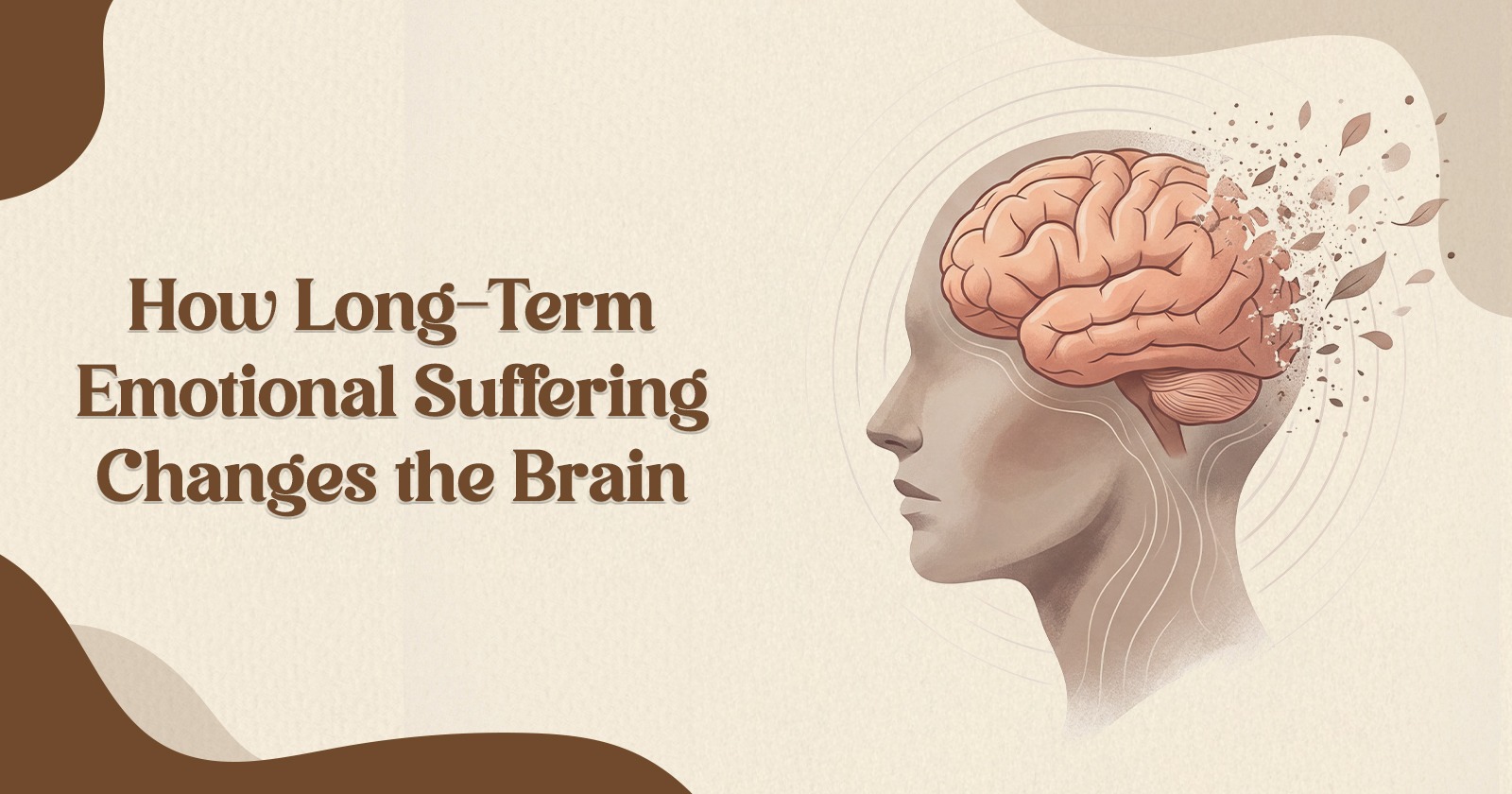
How Long-Term Emotional Suffering Changes the Brain
At a recent brunch, I met my friends after a long time. The conversation revolved around anything and everything. While we reminisced about old times, we also spoke about our lives in general, how times have changed, how the kids don’t listen to us, and whatnot. Amid food, laughter, small banters, and teasing, I noticed a friend was quiet.
She wasn’t the most talkative in our group, but that day her silence felt different. She smiled at the jokes, nodded along, yet her words lacked conviction. She kept pushing food around her plate. To most, it might have looked like she was simply in a low mood. But I sensed something deeper.
As we took each other’s leave, I hugged her and whispered, “Call me when you want. I’ll be there both as a friend and therapist.
She looked at me, unsure at first, and then came a wry smile on her face. Two weeks later, she called and asked if we could meet for coffee. I agreed. We met. She opened up. And later took up anxiety & stress therapy as well.
A Silent Suffering
My friend, as it turned out, had been carrying emotional stress for nearly two decades. Daily life had her juggling household and office responsibilities, caring for aging parents, raising young kids, and managing everything alone without her deceased life partner. The constant emotional and financial strain had quietly taken its toll. Her life’s hardship had her stress converted into long-term emotional suffering.
And that’s the thing. This is what long-term emotional suffering often looks like. It’s not always loud or dramatic. More often, it’s subtle, persistent, and draining. It’s a bit like carrying around a backpack full of stones. At first, you adjust, keep walking, and tell yourself it’s manageable. But over time, each unresolved hurt, each disappointment, and each unspoken worry adds another stone. Eventually, the load slows you down and makes everyday tasks feel heavier. It leaves you exhausted even when nothing “big” seems wrong.
The tricky part? From the outside, no one sees the backpack. They just see you moving through life. That’s why long-term emotional suffering can be so hard to spot. It hides behind smiles, routines, and responsibilities.
So, what exactly is long-term emotional suffering? It means carrying emotional stress for years without proper release or support. It can stem from ongoing work pressure, relationship difficulties, family expectations, past experiences that were never addressed, or simply feeling stuck and overwhelmed. Unlike short-term stress, which fades once a situation passes, long-term suffering lingers in the background. The mind rarely gets a chance to relax. Over time, the brain starts treating stress as the “normal” state.
That’s why professional help becomes so important. Therapy isn’t about “fixing” things and situations for you. It’s about helping you unpack that heavy backpack, one stone at a time. A therapist provides the safe space and tools to recognize patterns. They help release what’s been weighing you down, and rebuild healthier ways of coping. Naming the struggle is the first step, but seeking support is what truly lightens the load.
Why Does the Brain React So Strongly to Ongoing Stress?
Your brain is like a built-in safety officer. It always looks out for threats to keep you safe. When stress shows up, say a deadline, it turns the alarm switch on. Your body gets a burst of energy, and your focus sharpens. For a short while, that can actually help you power through tasks.
But emotional stress is a different story.
Unlike a quick deadline rush, it doesn’t fade once the moment passes. Instead, the brain stays on high alert. It constantly searches for threats that may not even exist. Over time, this hypervigilance rewires how the brain works. The amygdala, our internal alarm system, becomes overactive. The prefrontal cortex, the part that helps us reason and regulate, struggles to keep up. Even small challenges start to feel overwhelming, and relaxation feels out of reach. It’s as if the brain learns to expect conflict or danger. This leaves us stuck in a cycle of tension long after the cause of stress is gone.
What Changes Happen in the Brain Over Time During Long-Term Emotional Stress?
When emotional suffering lingers for months or even years, the brain doesn’t simply “get used to it.” Instead, it begins to adapt in ways that show up in everyday behavior and thinking. These changes are not signs of weakness. They’re signals that the brain has been carrying too much weight for too long. Four of the most common shifts people experience are:
1. Increased Emotional Reactions
Situations that once felt manageable can suddenly feel overwhelming. Small disagreements, constructive feedback, or minor setbacks may trigger undue emotional responses.
2. Difficulty Focusing and Thinking Clearly
Long-term stress drains mental energy. Concentration becomes harder, decision-making feels confusing, and even routine tasks can feel exhausting. Many people describe feeling mentally tired all the time, forgetting simple things, or struggling to complete their daily responsibilities.
3. Constant Sense of Worry
The brain gets conditioned to expect problems. It begins to live in a state of “what if.” This constant worry leads to overthinking. There is a constant thought that something bad is just around the corner.
4. Reduced Emotional Balance
Perhaps the most common change is a loss of emotional steadiness. People often feel low, irritable, or drained without any clear reason. This imbalance reflects the brain’s struggle to regulate emotions after being under prolonged pressure.
Signs and Impact of Emotional Suffering on the Brain
Long-term emotional suffering often hides in plain sight. People may feel tense even on holidays, struggle with sleep, or wake up exhausted. Routine tasks start to feel overwhelming. Social interactions drain energy, and emotional numbness sets in. These subtle signs gradually show up at work and in personal life.
At work, productivity dips, confidence weakens, and mental exhaustion sets in. At home, patience wears thin, friendships fade, and even familiar spaces feel disconnected. These changes are reminders that the brain has been under stress for too long, signaling the need for care and healing.
The Role of Anxiety & Stress Therapy
Long-term emotional suffering reshapes how the brain works, keeping it stuck in a constant state of alert. This makes it harder to focus, feel balanced, or truly relax. Therapy offers a way out of this cycle. Therapy helps individuals understand their emotional triggers and recognize stress patterns. It provides both structure and relief to build healthier responses to situations. It teaches people to notice stress signals early, connect emotions with thoughts and actions, and reduce mental overload before it becomes overwhelming. With timely guidance, the brain can gradually step away from being hyper alert. The brain relearns calmer patterns and restores emotional balance. Seeking therapy isn’t a sign of weakness. It’s a step toward healing, resilience, and reclaiming the ability to live with clarity and peace.
Read More:- https://www.drshilpagupta.com/blogs/is-my-pain-trauma-how-therapists-differentiate-stress-and-trauma
Post a comment